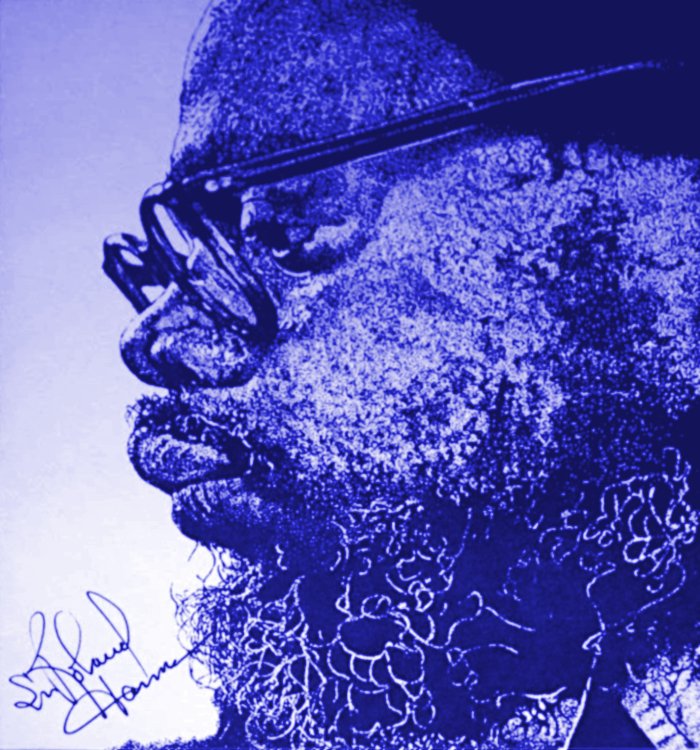
From Detroit to “Sir”
Born February 10, 1932 in Detroit, Michigan, Sir Roland Hanna was a pianist of uncommon lyricism, harmonic polish, and swing. After early classical study and time in Detroit’s vibrant jazz community, he pursued formal training in New York (including study at Juilliard) while working with leading bandleaders and singers.
By the 1960s he was a featured pianist with the Thad Jones/Mel Lewis Orchestra and later co-founded the New York Jazz Quartet. A versatile soloist, small-group leader, and big-band pianist, he moved fluidly from stride gestures to modern harmony, often with a classically informed touch. He also taught (notably at Queens College, CUNY) and composed for solo piano, ensembles, and orchestra.
In recognition of his achievements he was knighted by the Republic of Liberia, after which he was often billed as Sir Roland Hanna. He remained active as a performer and educator until his passing on November 13, 2002.
Highlights & collaborators:
Lyrical grace, orchestral voicings, deep time
- Touch & tone: singing right-hand lines with a rounded, vocal attack; dynamic control from whisper to roar.
- Harmony: sophisticated inner-voice movement, elegant reharmonizations, and Duke-inspired colorations.
- Rhythm: authoritative swing feel; stride and walking tenths used as propulsion in solos.
- Classical influence: counterpoint and impressionistic textures (Debussy/Ravel) woven into jazz language.
- Settings: commanding solo performances, nimble trio work, and consummate big-band accompaniment.
Roots and inspirations
Hanna’s vocabulary reflects a deep study of piano lineage and orchestral jazz writing. Among the formative voices often associated with his approach:
- Duke Ellington & Billy Strayhorn — color, voicings, and a composer’s sense of form.
- Art Tatum — virtuoso fluency and harmonic breadth.
- Teddy Wilson & Hank Jones — elegance, balance, and impeccable swing phrasing.
- Bud Powell — bebop linearity and momentum.
- Classical modernists (e.g., Debussy, Ravel) — impressionistic harmony and texture.
Albums & notable recordings
A brief, non-exhaustive selection spanning solo, trio, and ensemble work.
- Sir Elf — signature solo/trio statements that spotlight touch and harmony.
- Perugia — live solo performance known for lyrical invention.
- Time for the Dancers — swinging small-group set with modern harmonic turns.
- New York Jazz Quartet – In Japan — chamber-like interplay within a modern quartet.
- A Tribute to Duke (various titles/editions) — Ellingtonia through Hanna’s orchestrally voiced piano.
- 1 + 1 (with George Mraz) — intimate duo explorations (bass & piano).
- Appearances with the Thad Jones/Mel Lewis Orchestra — exemplary big-band pianism.